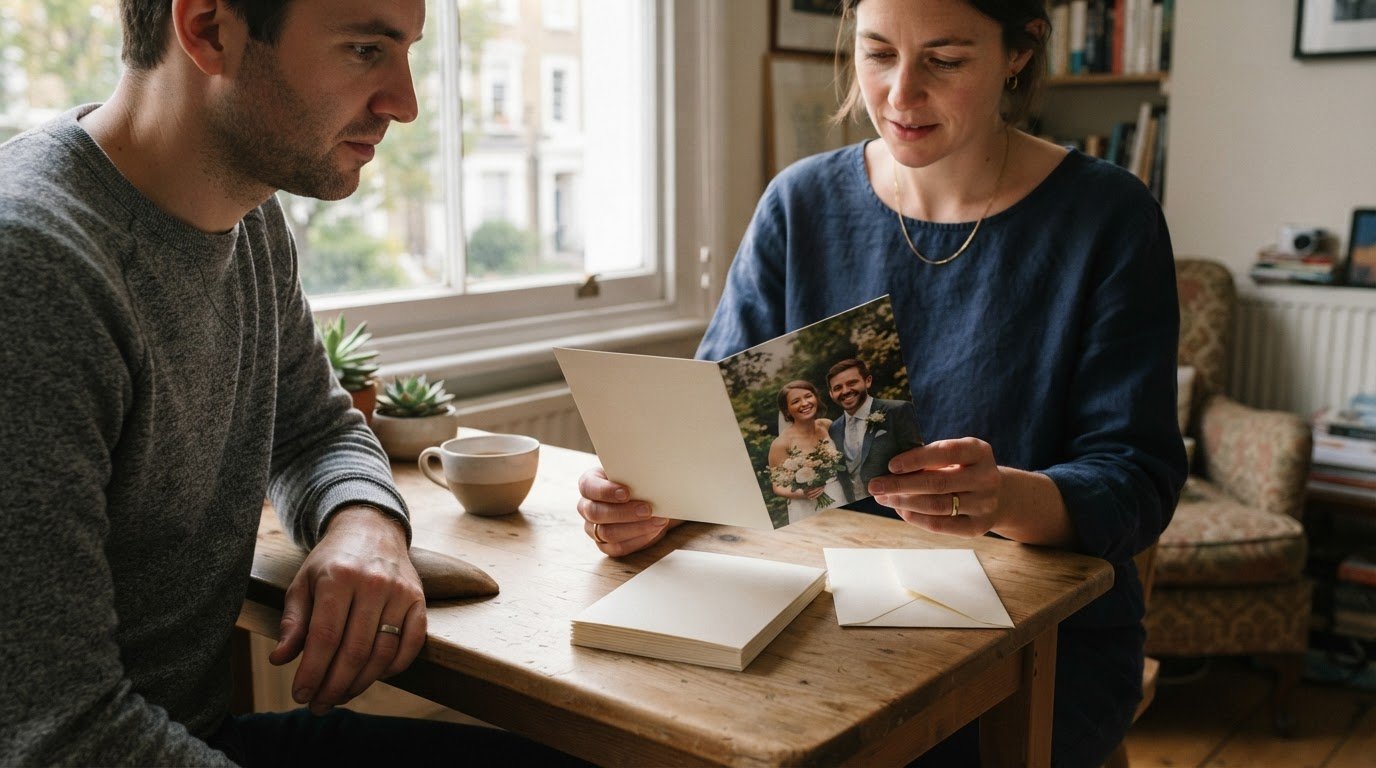
Can you review a thank-you card design before placing a larger order? Yes, a sample can include your personalization, helping you assess the design before moving ahead. A thank you card printing service can bring wedding photos, a personal message and distinctive design choices together in a finished card.
It’s reasonable to want a card that feels personal and looks polished, with a straightforward ordering process. Your image, wording, layout and format all shape the result. Folding is another detail to consider, especially when you want room for both a message and a photo.
This guide explains how to incorporate photos and other details, choose a folded format and use a sample to review your design. You’ll also find tips for ordering a small batch of wedding thank-you cards and planning a print run that suits your project.
Key Takeaways
- See how coordinated stationery can keep your brand identity consistent across printed materials.
- Learn how brochure format, paper stock and finish shape the final piece.
- Explore the design and finishing choices that help business cards suit your needs, including small-batch options.
- Find out how prepared artwork can support a faster business card order.
- Understand what to consider for urgent print projects and wedding photo cards, from personalization and folding to sample review.
Business stationery for a consistent company image
Business stationery connects the printed pieces people receive from your company. Consistent colours, typefaces and logo placement help a letter, card and envelope feel related. For example, repeat your logo position and brand colours on a thank-you card and business card. This creates a recognisable visual system without making every item identical. Choose a clear layout first, then apply it across each piece.
Personalization makes each card specific to its recipient or purpose. A personalized card can include a logo, photo, handwritten signature or tailored message. For a business thank-you, add the recipient’s name and a concise note about the meeting or order. For a wedding, use a photograph of the couple and their signatures. A sample featuring these details lets you see how the design and cardstock work together.
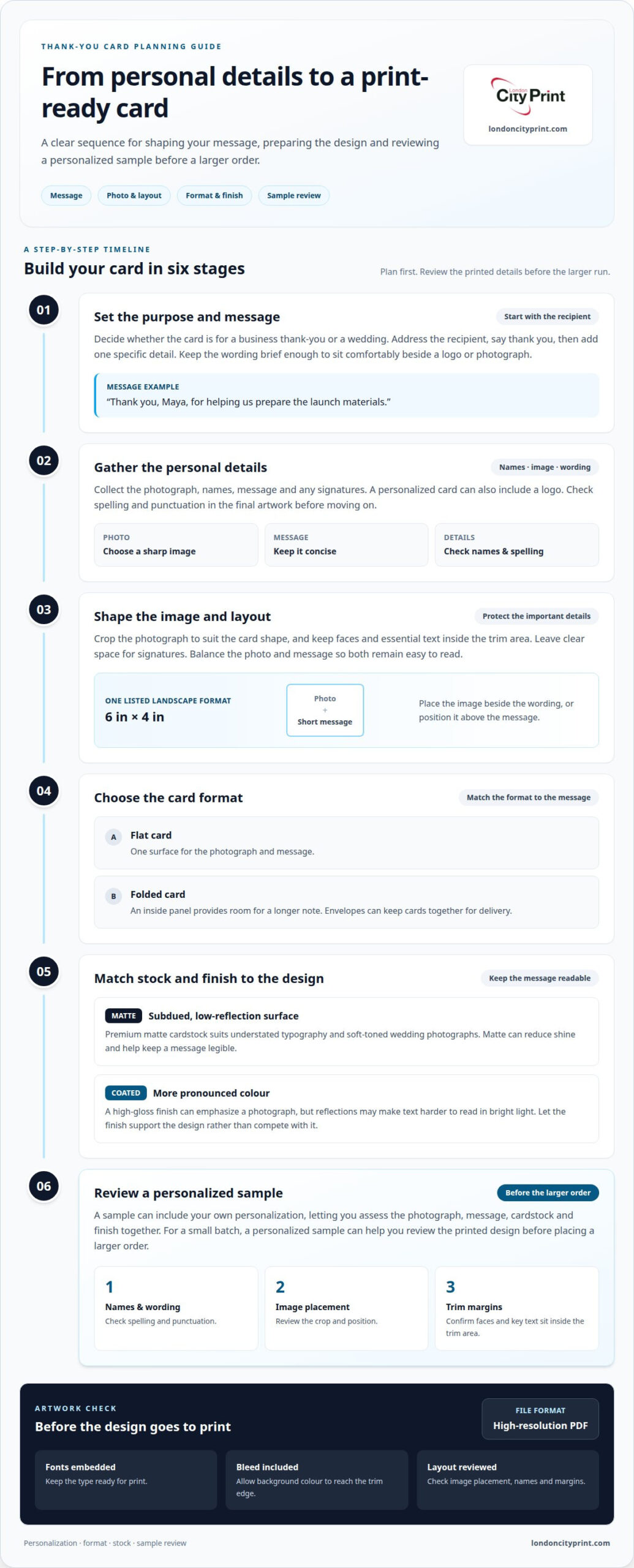
The message gives a card its personal touch, so write it for the person receiving it. Start with their name, say thank you, then add one specific detail. For instance: “Thank you, Maya, for helping us prepare the launch materials.” Keep the text brief enough to read comfortably beside a logo or image. Before printing, check names, spelling and punctuation in the final artwork.
Personalized photo cards need a layout that gives the image room to read clearly. Choose a sharp photograph, crop it to suit the card shape and keep important faces away from the trim edges. Pair the image with a short message, such as “Thank you for celebrating with us.” If you include signatures, leave enough clear space for them. A wedding photo card can then balance the photograph, message and personal details.
Everyday personal cards can follow the same approach without feeling formal. A birthday note, thank-you message or congratulations card can use a consistent type style while changing the wording and image. Before ordering, choose the card’s purpose, gather names and images, write the message, then review the layout and cardstock. A thank you card printing service can support this planning when you need coordinated business or personal correspondence.
Company and product brochures
Company brochures explain what you do; product brochures help readers compare specific offers. Choose a format that fits the content, not a passing decorative trend. A compact folded brochure can introduce a service, while a multi-page booklet can organize specifications, use cases and contact details. Keep the logo, type styles and colour palette consistent across both. This visual system can also carry through to invitations and thank-you cards.
Cards, invitations and announcements need a clear information hierarchy. Put the event or thank-you message first, followed by names, dates or images. A wedding announcement might lead with the couple’s names and photograph; a business thank-you card can prioritize the recipient and a concise greeting. Give each item one main purpose. That decision guides the format, text size and space for decoration.
For wedding and photo thank-you cards, choose a layout that protects the image and keeps the greeting easy to read. One listed format measures 6 inches wide by 4 inches high. This landscape proportion can hold a photograph beside a short message, or place the image above the wording. Keep faces and essential text inside the trim area. Use a high-resolution photograph to retain detail in print.
Cardstock affects how a card feels and how its design reads. Premium matte cardstock has a subdued, low-reflection surface that suits understated typography and soft-toned wedding photographs. Coated stock can make colours look more pronounced, while matte reduces shine. For business thank-you cards, choose stock and finish to complement your company’s other printed materials. Use the same brand colours and logo treatment for a coordinated result.
Finishes should support the design rather than compete with it. A high-gloss finish can emphasize a photograph, but reflections may make text harder to read in bright light. A matte finish can keep a message legible and create a restrained look. For a brochure, consider how the cover finish protects the design and feels in the reader’s hands. For a card, prioritize image clarity and readable type.
Review a personalized sample before approving the full design. Samples can include personalization, so you can assess the photograph, message, cardstock and finish together. Check names, image placement and trim margins in that order. A thank you card printing service can help coordinate these choices with your brochure design. For wedding stationery, a matching card and announcement can carry one visual style across the event.
Business card printing and finishing options
Choose a design format, theme and finish that suit the recipient and purpose. Personalization can make a business card or thank-you card feel specific without crowding its message.
Custom Design Uploads and Templates
Uploading custom artwork gives you control over layout, wording and image placement. Use a high-resolution PDF with fonts embedded and include bleed so background colour reaches the trim edge. If you start with a ready-made template, replace sample text and images, then review names, alignment and margins. Templates can speed up design, while a custom file supports a more individual result.
For a small batch, personalized samples can help you assess the printed design before placing a larger order. A sample can include your personalization, so you can review your own message and artwork.
Card Design Customization
Customize the format, image, message and finish to suit the occasion. A holiday greeting might use a seasonal photo; a graduation card could feature the graduate’s name and a brief note. For a business thank-you, keep the company mark visible and the recipient’s name easy to read. Choose cardstock and a finish that support the design rather than distract from it.
Flat cards provide one surface for a photo and message. Folded cards add an inside panel for a longer note, while envelopes keep a card ready for mailing. A listed format measures 6 inches wide by 4 inches high. Check that your layout suits the chosen size before finalizing the artwork.
How does print quality compare across popular thank-you card services? Compare the format, cardstock, finish, personalization and quantity together. These choices shape the printed result and the order specification.
Which thank-you card printers offer rush shipping or local pickup? These are different fulfillment options: rush shipping speeds delivery, while local pickup means collecting your order. Choose the option that suits your destination and schedule.
How long does thank-you card printing and delivery take? Production and shipping times can vary, so allow for both when planning delivery. Build both stages into your planned delivery window.
What are the shipping, return and reprint policies for thank-you card orders? Shipping time follows production, and you should report order problems to the seller within 30 days of delivery. Return and reprint terms vary by seller, so review the terms that apply to your order.
Business cards in one hour
Business cards with a one-hour turnaround give you a rapid production option when an event or meeting is approaching. This suits a straightforward order with artwork ready for print. Prepare the final design and confirm its size, orientation, quantity and finishing choices before submitting it. Clear decisions help avoid last-minute layout changes.
Start with a high-resolution PDF that preserves your artwork, fonts and layout. Set the document to the required finished card size, then add bleed where background colour or imagery reaches the edge. Keep names, phone numbers and logos inside the trim area. Include crop marks only if the print-file specifications call for them.
Check these artwork details before submitting your file:
- Confirm the card dimensions and whether the design is single- or double-sided.
- Use CMYK colour mode for print artwork, and review colours against your intended design.
- Embed fonts or convert text to outlines to avoid font substitution.
- Check spelling, email addresses and telephone numbers at the final size.
Keep the design easy to scan. Make your name and role prominent, then group contact details in a clear order. For example, place a logo at the top, your name beneath it, and your email and telephone details together. Avoid tiny text and fine details that may lose clarity in print. If you use a reverse design, make sure both sides align correctly.
Before the order enters production, review the file at full size. Check that images look sharp, text is legible and essential content sits safely inside the trim edge. A file check can identify common pre-press issues, including bleed, resolution and font embedding. Correcting these details before submission helps prevent delays caused by artwork revisions.
For a fast order, settle the stock and finish along with the artwork. A matte stock offers a restrained appearance; lamination changes the surface and feel. Keep the specification consistent across your file and order details. If you need business cards for a conference, prepare the final contact information before designing so edits don’t hold up the print-ready file.
Use the one-hour option for a focused business card order, not a complex redesign. Submit a checked file with clear specifications, then allow time for collection or delivery arrangements. This preparation gives production a clear starting point and helps you have cards ready for a meeting, event or client handover.
Overnight and urgent printing with delivery to your stand
Urgent print work depends on more than production speed. Your deadline, finished artwork, print format and delivery destination all affect the plan. Allow separate time for preparing the file, production and transport. This distinction helps you set a workable schedule for an overnight order or event delivery.
Start with the exact items your event requires. A display might need foam board graphics, handouts or updated presentation materials. Confirm the final dimensions, quantity, finish and placement before preparing artwork. For each item, note when it must be ready and where the team will receive it. A clear brief reduces avoidable questions during a tight production window.
Artwork readiness is critical. Supply a high-resolution PDF with embedded fonts, correct dimensions and bleed where colour reaches the edge. Check names, dates, phone numbers and event details before sending the final version. Keep revisions to a minimum by assigning one person to approve the file. Late copy changes can mean fresh checks and disrupt production planning.
For delivery directly to a stand, provide practical handover details with the print brief:
- Give the event name, venue and stand identifier.
- State the delivery date and the time the materials must arrive.
- Name the person receiving the order and provide their event contact details.
- Explain how packages should be labelled and where the team can access the stand.
These details help distinguish venue delivery from delivery to a nearby office or reception. Keep a separate copy of the delivery instructions with your event schedule. If the venue has specific access arrangements, include them in the brief so the delivery plan accounts for the right destination.
Choose urgent production for a defined requirement, not an unfinished design process. London City Print offers same-day printing from its Holborn location. Foam board printing can support event signage, while legal bundle printing serves time-sensitive document requirements. Share your finished artwork, specifications and deadline in one concise brief. This gives the print team the information needed to plan the work clearly.
Discuss your print requirements when you are preparing materials for a deadline or event stand.
London City Print services for your next print project
London City Print can support your next print project with business cards, booklets and brochures, posters or wire binding. Choose the format that meets your immediate need, whether you’re preparing contact details, explaining a product or presenting information at an event. A clear brief helps align the printed item with its purpose, design and delivery requirements.
Business cards suit introductions, meetings and events where people need your contact details after a conversation. Keep your name, role and preferred contact method easy to find. A consistent logo and colour palette can connect the card with other materials, such as a company brochure or poster. Check every detail in the final artwork before production.
Booklets and brochures organize information for readers who need more than a brief introduction. Use a brochure to explain a company or product, and arrange the content in a clear order. Give each section a distinct purpose, such as outlining features, describing applications or providing contact information. This structure helps readers find the details they need.
Posters suit messages that need to be read at a distance or displayed in a shared space. Prioritize one headline, a clear visual and essential supporting details. Keep text concise and guide the eye from the main message to any next step. For an event, prepare the final location and display requirements before approving the artwork.
Wire binding works well for documents that readers need to open and consult repeatedly. The metal wire holds pages together and allows the document to lie flat. This format can suit reference material, presentations or guides where readers need to see both pages. Plan page order and margins so text remains clear near the binding edge.
For a coordinated project, decide which items need to work together. A brochure can provide detail, business cards can share contact information, and a poster can highlight a key message. Keep branding consistent, but adapt each layout to its format and audience. Prepare print-ready artwork with clear dimensions, colour and finishing instructions to support an efficient production process.
Share your project requirements with London City Print and contact the team to discuss the right print format for your needs.
Turn your card design into a coordinated print project
Your next step is to turn your preferred look into a clear print brief. Decide how the wedding photograph, names, message and layout should work together, then prepare artwork to match. A focused brief helps keep the design consistent from the first proof through to the finished print.
A thank you card printing service can be part of a wider visual plan for a wedding, event or business. London City Print also offers booklets and brochures, posters and wire binding for related printed materials. Match colours and typography across pieces while giving each format a clear purpose.
Bring your design direction and print requirements together before production. If you’re ready to discuss your project, contact London City Print. A clear starting point can help you move ahead with confidence.
Frequently Asked Questions
Can I order custom samples?
Yes. You can request a sample with personalized details, including your message, photograph, logo or signature. Use it to assess how the elements look together on a physical card. For a wedding design, check that the image and names feel balanced; for a business greeting, make sure the logo doesn’t overwhelm the message. This gives you a practical reference while finalizing the design.
What details should I provide when ordering thank you cards?
Specify the quantity, format, stock, finish and delivery requirements for your order. Include any personalization details, such as names, messages or photographs, and clarify whether they vary between cards. If you’re coordinating cards with other printed materials, describe the full project together. This helps define the order specification and the details needed for production.
Which thank you card printing services offer minimum order quantities or single-card printing?
Order quantities and single-card options depend on the printer and production method. Digital printing is most efficient for short runs under 500 units. For a small personal batch, specify how many cards need the same design and whether any names or messages will differ. That distinction helps define the job clearly, especially for wedding cards prepared for different recipients.
What paper, finish, size, and envelope options are available for thank you cards?
Choose these details to suit the card’s use and artwork. A 6-inch-wide by 4-inch-high format is one available card size. Consider whether the design needs a flat or folded layout, and whether envelopes should accompany the cards. For a photo-led design, review how the finish affects image appearance; for a handwritten note, consider how the surface will work with your pen.
Can I upload my own design or use a custom template for thank you cards?
Yes. You can provide your own artwork or adapt a template to suit the occasion. A wedding design might combine a couple’s chosen photograph with a short greeting, while a business card can use a logo and recipient-specific wording. Prepare the artwork at the finished dimensions and check spelling, image placement and trim margins before submitting it.
What file formats and image resolution are required for custom thank you card printing?
A high-resolution PDF is suitable for preserving your layout, fonts and image quality. Set the artwork to the finished card dimensions and include bleed when colour or images extend to the edge. Embed fonts or convert text to outlines, then inspect the file at full size. Pay particular attention to small text and fine details in photographs before submitting your artwork.
How do I compare thank you card printing services?
Compare format, cardstock, finish, personalization and quantity, since these choices shape the printed result and order specification.