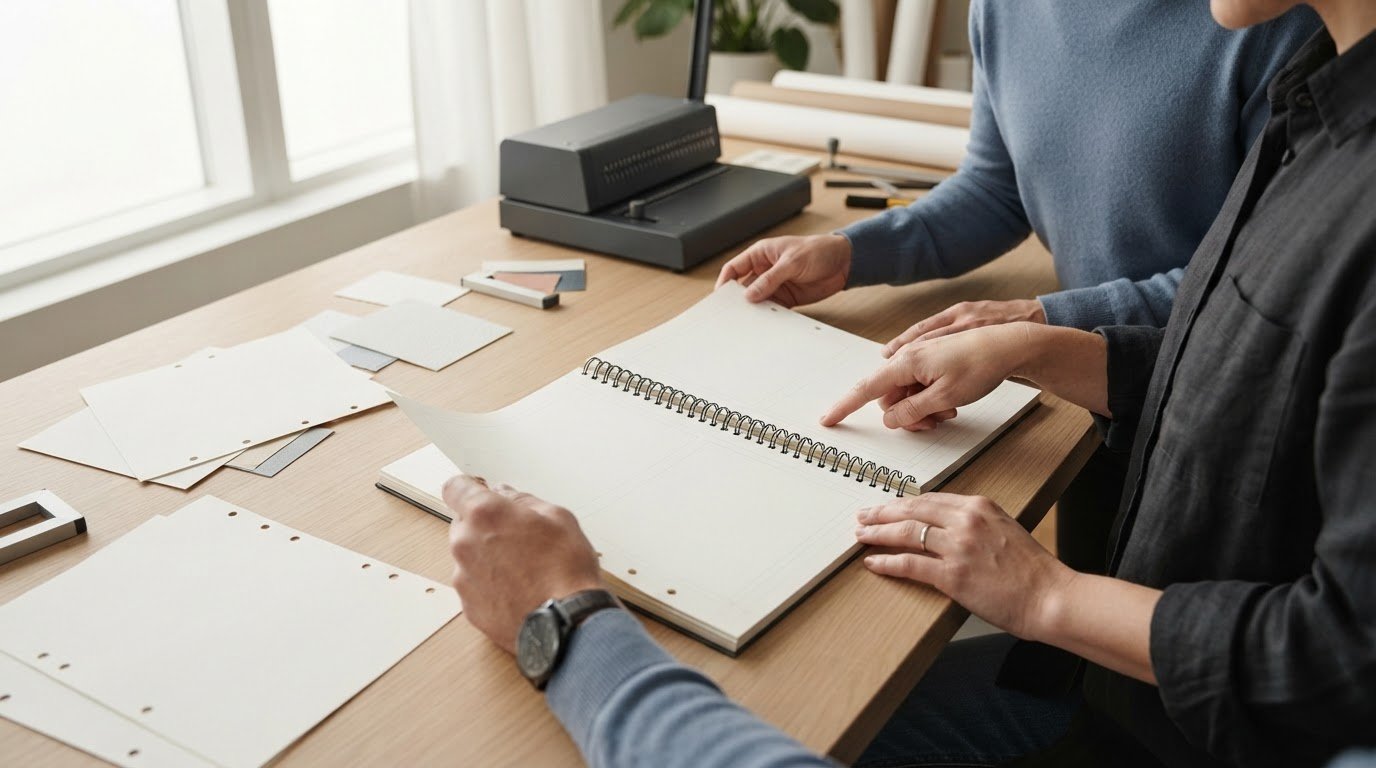
A document can look polished on screen and still feel awkward in use if its binding does not suit its purpose. Wire binding uses a metal wire comb to hold pages together, allowing the document to lie flat. It is a practical finish for reports, presentations, manuals and other documents people need to read or refer to regularly.
You need a finish that looks professional, works well in the hand and fits your deadline. Choosing between wire binding, comb binding and PUR binding comes down to how people will use the document, how you want it to look and whether readers need to turn pages back easily.
This guide explains where wire binding works well and how it differs from other methods. You will also learn how to prepare artwork for accurate production, including setting up individual pages, allowing for bleed and keeping important content clear of the binding edge. With a suitable finish and print-ready files, you can reduce layout issues and achieve a clean result.
Key Takeaways
- Choose wire binding when a document needs to lie flat for reading, note-taking or presentation.
- Compare wire, comb and PUR binding by how each finish opens, feels and suits your document’s purpose.
- Leave clear space along the binding edge so punching and finishing do not interfere with important content.
- Set up pages in the correct order and orientation, then review bleed and artwork before sending your file to print.
- London City Print provides wire binding as part of its document printing and finishing services, with a Central London facility near the British Museum.
What Is Wire Binding and When Does It Suit a Printed Document?
A printed document needs to work as well as it looks. Wire binding is a practical choice when readers need to open pages easily, refer to information while working or present material without holding the document open. Choose it based on how people will handle the document and the impression you want it to make.
How Does Wire Binding Hold Pages Together?
Wire binding is a finishing method that secures punched pages with a shaped metal wire element, allowing the document to lie flat when open.
The printer punches a row of holes along one edge of the pages, then threads and closes the wire through them. Pages turn around the bound edge and can stay open for consultation. This makes it easier to read a spread, refer to a diagram or write notes without continually holding the pages down.
Wire binding uses a metal wire comb, often called twin-loop binding or Wire-O. For a broader explanation of the method and its terminology, see What is Wire Binding?
Which Documents Commonly Use Wire Binding?
Choose the finish based on what readers need to do with the document:
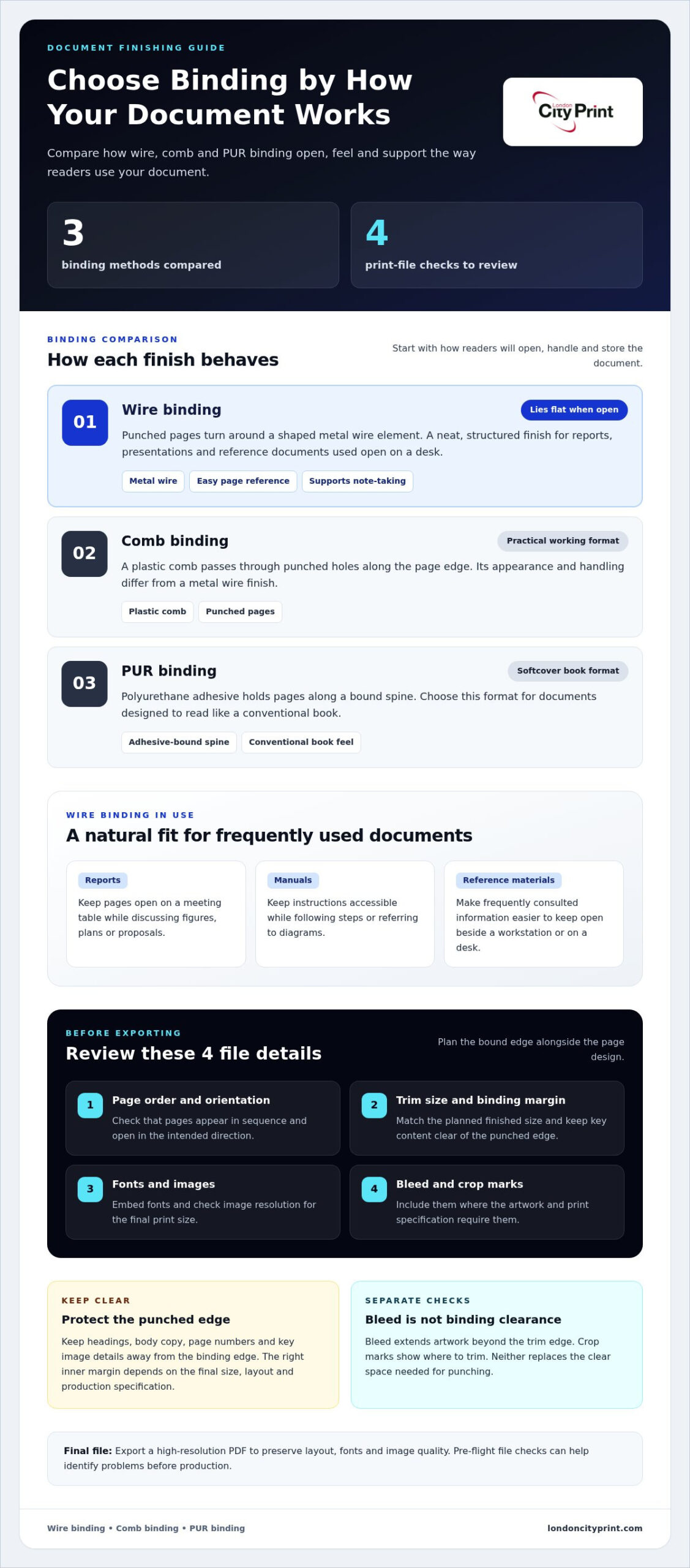
- Reports and presentations: Pages can stay open on a meeting table while you discuss figures, plans or proposals.
- Manuals: Instructions remain accessible as readers follow steps or refer to diagrams.
- Reference materials: Frequently consulted information is easier to keep open beside a workstation or on a desk.
These examples share a practical need: readers must access the content repeatedly or use both hands while following it. A lay-flat binding supports that use and gives the document a neat, structured appearance. The finish should serve the content, not act as decoration alone.
Before choosing, consider where and how the document will be used. A presentation handled in a meeting may need to open smoothly on a table. A manual may need to stay open during a task. A report intended mainly for brief reading may have different handling needs. Think about the document’s purpose, how often it will be used and the presentation you want, then match the binding to those priorities.
How Wire Binding Affects Page Layout, Handling and Presentation
Plan the bound edge before you finish the page design. Wire binding requires holes along one side, so text, page numbers and essential image details need enough clearance from that edge. Otherwise, punching can obscure content or make it difficult to read.
The binding edge also affects how readers open and handle the document. Choose portrait or landscape orientation based on the content, then set the binding on the edge that gives readers a natural way to turn pages. For example, a landscape chart may need a different opening direction from a portrait report. Review the finished page size and layout before exporting the file.
How Much Space Should You Leave at the Bound Edge?
Leave an inner margin that keeps important content clear of the punched area. No single margin measurement suits every document. The right allowance depends on the final size, layout and production specification. Keep headings, body copy, page numbers and key image details away from the edge, and consider how the page will read once it opens.
Binding clearance is separate from trim and bleed. Bleed extends artwork beyond the trim edge so colour or images reach the finished edge. Crop marks indicate where the printer should trim. Neither replaces the clear space needed for punching. Confirm the final trim size and binding edge before exporting.
What Should You Check Before Exporting a Print File?
Check the details that affect reading order and print quality:
- Page order and orientation: Confirm that pages appear in sequence and open in the intended direction.
- Trim size and binding margin: Match the document dimensions to the planned finished size and keep key content clear of the punched edge.
- Fonts and images: Embed fonts and check that images have enough resolution for the final print size.
- Bleed and crop marks: Include them where the artwork and print specification require them.
Export high-resolution PDFs to preserve layout, fonts and image quality. Pre-flight file checks can help identify problems before production, but exact tolerances depend on your document specification. Review the artwork and finishing requirements together before sending the file. London City Print can help you prepare professionally finished documents with the layout and binding in mind.
Wire Binding Compared With Comb Binding and PUR Binding
The right binding depends on how readers will open, handle and store your document. Wire and comb methods secure punched pages along an edge, while PUR binding uses adhesive to form a softcover book with a spine. Compare their practical differences before you finalise the format.
| Binding method | How it opens | Presentation and typical use |
|---|---|---|
| Wire | Pages turn around a shaped metal wire element and the document can lie flat. | A neat, structured finish for reports, presentations and reference documents used open on a desk. |
| Comb | A plastic comb passes through punched holes along the page edge. | A practical format for working documents. Its appearance and handling differ from a metal wire finish. |
| PUR | Polyurethane adhesive holds pages along a bound spine. | A softcover book format suited to documents designed to read like a conventional book. |
When Is Wire Binding a Better Fit Than Comb Binding?
Wire binding uses a shaped metal element threaded through punched pages. It suits documents that need to remain open for reference, such as a presentation viewed during a meeting or a report consulted beside a laptop. The metal finish also gives the document a formal, structured appearance.
Comb binding uses a separate plastic element through holes in the page edge. It can work well for practical materials where function matters more than a metal finish. Consider whether your priority is a polished presentation, easy access to pages or a working document that readers may need to update. For more background on wire styles and terminology, see What Is Wire Binding?
When Should You Consider PUR Binding Instead?
Choose PUR binding when you want a softcover document with pages joined along a spine, rather than a row of visible punched holes. It suits a publication intended to be handled and read like a book. The spine also gives you a defined edge for the cover design. If readers need the document to lie flat for ongoing reference, a punched binding may better match that use.
No method is best for every project. Match the finish to the reader’s task, the document’s presentation and the way it will be handled.
How to Prepare a Document for Wire Binding
A reliable print file starts with the finished document in mind. Plan the page size, reading direction and binding edge before exporting, then review the PDF for layout and technical issues. Follow these steps to catch mistakes before production.
Set Up the Pages and Artwork Before Printing
Work through these setup steps in order:
- Confirm the finished size and orientation. Decide whether the document will be portrait or landscape, and identify the edge readers will open from.
- Arrange pages in reading order. Supply individual pages in sequence, not printer spreads, unless your printer gives different instructions. Check that headings, diagrams and page numbers follow the intended order.
- Protect the binding edge. Keep essential text and image details clear of the area needed for punching. The allowance depends on the document’s final specification, so do not treat one margin as a universal rule.
- Set up trim and bleed where needed. Add bleed when colour or an image must extend to the trimmed edge. Include crop marks if the file setup requires them. These trim details are separate from the clear space needed for binding.
Check that the cover artwork and inside pages share the correct orientation. A page that looks right on screen can be confusing in the finished document if it opens from the wrong edge.
Review the PDF Before Sending It to Print
Export a high-resolution PDF that preserves the page layout, fonts and image quality. Before sending it, check that fonts are embedded and images remain sharp at their placed size. Confirm the page sequence, finished dimensions and intended colour profile. Print files often use CMYK, but follow the colour requirements for your specific job rather than converting profiles without guidance.
- Open the exported PDF and scan every page at normal reading size.
- Check that no text or essential artwork sits too close to the binding edge.
- Verify bleed, crop marks and trim dimensions against the artwork and production instructions.
- Review colour, image quality and page order before approving the file.
Pre-flight file checks can identify issues with fonts, resolution, colour profile and bleed before production. A file-checking service can provide a technical review, particularly when you need to avoid preventable errors. For professional preparation and finishing, send your document for professional wire binding.
Professional Wire Binding With London City Print
London City Print provides wire binding as part of its commercial document printing and finishing services. The independent printer has operated since 2009, with a Central London facility near the British Museum. Bringing printing and finishing together helps you plan the file and finished document as one production job.
Digital printing is most efficient for short runs under 500 units. If you need a smaller quantity of reports, presentations or manuals, digital printing can be a suitable production option. Share the finished format and intended use so the document’s layout, print requirements and binding work together. Provide your deadline early to support clear production planning.
What to Include in a Wire Binding Print Brief
A concise brief helps your printer understand what the document needs to do and how it should look. Include:
- Format: Finished size, page order, orientation and which edge should be bound.
- Purpose: Explain whether readers will use the document in meetings, consult it as a manual or keep it for reference.
- Artwork and stock: Supply the print-ready file, note paper preferences and identify any custom finishing options you want.
- Schedule: State your required deadline so the production team can plan around it.
Specific instructions reduce ambiguity. For example, a landscape presentation and a portrait reference manual may need different page orientations and opening directions. Clear details help align the file with the finished format before printing begins.
Move From Print-Ready File to Finished Document
Production connects file preparation, printing and finishing. A technical file review can identify issues such as page order, missing fonts, image quality, colour settings or bleed before printing. The print stage follows the approved file, and finishing completes the document in the format set out in your brief. Review the PDF and specifications together to keep the handoff clear.
For your project, Discuss your wire binding print requirements with London City Print and share the document size, intended use and deadline.
Prepare Your Document for a Confident Finish
Choose a binding finish by considering how readers will use and handle the document. Wire binding works well when pages need to lie flat for reference or presentation. Comb binding and PUR binding offer different opening and cover formats, so match the method to the document’s purpose.
Prepare the file with the finished format in mind. Confirm page order, orientation and trim size, keep essential content clear of the binding edge, and review bleed, fonts, images and colour settings before export. A careful final check helps prevent avoidable layout issues during production.
London City Print is an independent commercial printer founded in 2009, with a Central London facility near the British Museum. Its document printing and finishing services include wire binding, bringing the printed file and finished format together for your project.
Share your document size, intended use, artwork and required deadline to start a clear production discussion. Discuss your wire binding print requirements with the team to move forward with your finished document.
Frequently Asked Questions
What is wire binding?
Wire binding is a finishing method that uses a shaped metal wire comb to secure pages punched along one edge. The wire holds the pages together while allowing the document to lie flat when open. A bound report can stay open on a meeting table, while a manual can remain accessible during a task. Choose it based on the document’s purpose and how readers will handle it.
Does wire binding allow a document to lie flat?
Wire binding is designed to let a document open and lie flat, so readers can consult pages without holding them down. During a presentation, this can keep charts visible on a table. For reference work, it can help keep instructions in view while you take notes. The finished document’s handling can vary with paper stock, page layout and production details, so consider these alongside how readers will use it.
Is wire binding better than comb binding?
Neither wire binding nor comb binding is best for every project. Wire binding uses a shaped metal wire element through punched pages and supports lay-flat use, with a neat, formal appearance. Comb binding uses a separate comb-style element and offers a different look and feel. Choose by considering whether readers need pages open for reference, how they will handle the document and the presentation you want, rather than appearance alone.
Can you add pages to a wire-bound document later?
A wire-bound document usually is not as easy to edit as a loose-leaf file because adding pages generally means opening or replacing the binding. Whether you can alter a particular copy depends on its construction, so do not assume you can add sheets without affecting the finish. Confirm the content and page order before production. If updates are likely, plan how you will manage revised versions or keep a separate working copy.
How should I prepare a PDF for wire binding?
Prepare your PDF by confirming the final dimensions, page sequence, orientation and intended colour profile. Embed fonts and check that images have suitable resolution at their placed size. Keep essential text and artwork clear of the bound edge so punching does not obstruct content. Export a high-resolution PDF to preserve layout and image quality. Pre-flight file checks can help catch issues with fonts, colour, resolution and bleed before printing.
Which documents are suitable for wire binding?
Reports, presentations, manuals and reference materials can suit wire binding when readers need pages to lie flat or consult information repeatedly. A presentation may need to stay open during a meeting, while a manual should keep instructions accessible during use. Base your choice on purpose, expected handling and desired presentation. If the document should read like a softcover book or open differently, compare other finishes before preparing the file.