Print materials should earn their place in your campaign. Local business print marketing in London can combine business cards for introductions, flyers for offers and events, and brochures for explaining your services. Posters and roller banners can help carry the same message into a venue or team setting.
You already know that printed materials need to look professional and communicate clearly. The right format depends on what you want people to notice, remember or do. Practical details such as paper, colour and bleed also affect the finished result.
This guide explains which print materials suit business stationery, promotions, events and teams, and what to consider when preparing artwork. You’ll learn how brochures, cards, flyers and display prints differ, when design support can help, and how CMYK colour and bleed affect production. Use these details to plan a consistent campaign and choose print with a clear purpose.
Key Takeaways
- Match each printed item to its purpose, from business cards for introductions to flyers for promoting an offer.
- See how paper choice, colour setup and bleed can affect the quality of finished print.
- Choose brochures, reports and binding formats that make business information clear and easy to handle.
- Plan event and exhibition materials around the venue, display space and delivery requirements.
- Explore how cards, brochures, posters and wire binding can support a coordinated business presence.
Personalized service and design support
Good design support connects your campaign goal with the right print format. A business card needs clear contact details and recognisable branding; a brochure needs space for service information and images. A designer can organise these elements and prepare artwork in CMYK with bleed, so colours and trimmed edges follow the approved layout. These decisions help create a consistent look across your materials.
Local marketing guidance starts with the audience and area you want to reach. A message for Camden residents may need different imagery and wording from one aimed at visitors near Westminster. A print partner can help adapt the format and design to the intended location, campaign message and distribution plan. This borough-level focus helps you make print choices around a specific audience, rather than relying on generic London imagery.
Print and digital marketing have different ways to measure responses. Print puts a physical message in someone’s hands, while digital activity can direct people to online content. Your campaign objective and tracking method determine which results you can compare meaningfully.
London City Print offers Business Cards, Booklets and Brochures, Posters and wire binding for local business print marketing in London. These formats support introductions, service information, local promotions and presentations. Plan each project around approved artwork, production specifications and the required handover point. Include the delivery destination in your schedule so it is accounted for.
Effective London-focused design reflects its audience and setting rather than adding landmarks without purpose. A poster promoting a local service, for example, should make the service and response details easy to find. A brochure for a business meeting may need a different information hierarchy. Consistent type, colour and logo placement help cards, brochures and posters feel like part of the same brand.
Paper choice affects how a printed item feels and can support your environmental priorities. London City Print offers eco-friendly and recycled material options. Choose a weight suited to the format: a business card, brochure and poster each have different handling and display needs. Match the stock to the artwork and how you intend to use the finished item.
Finishing choices also affect how people handle print materials. Wire binding lets a booklet lie flat, which can be useful during a presentation or reference session. Before production, confirm the artwork, colour profile, bleed, finished dimensions and binding method. Clear specifications help prevent layout or finishing mismatches.
Business cards, brochures and reports
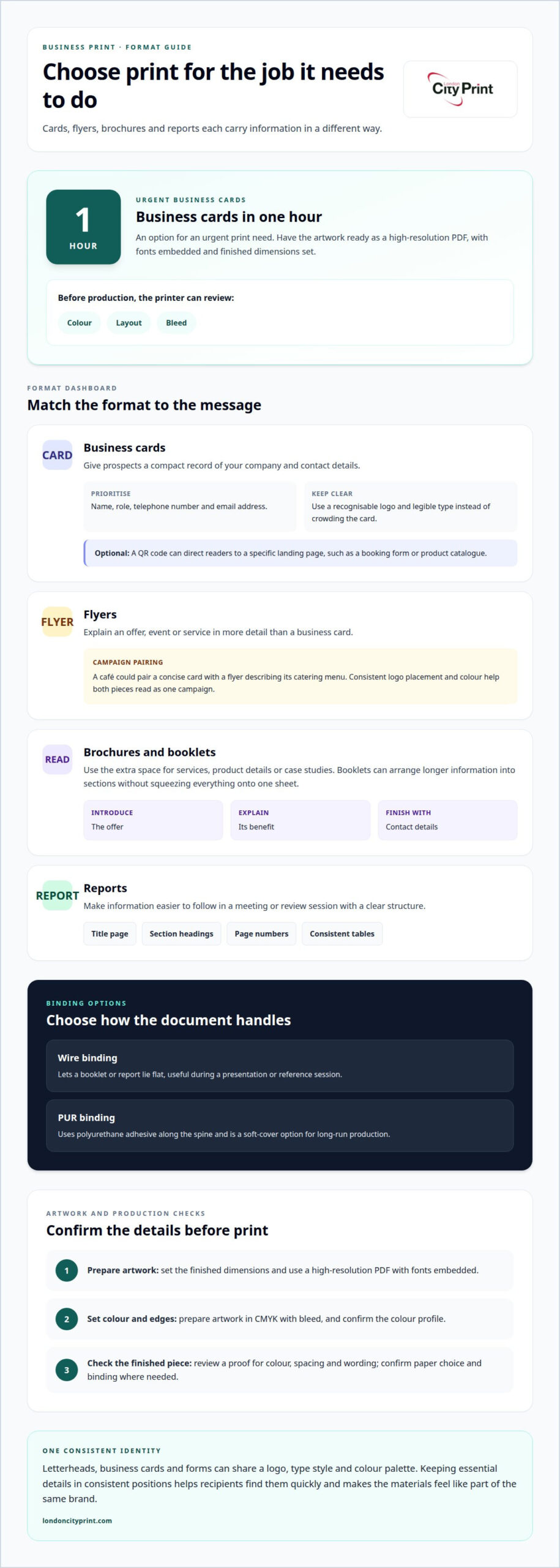
A business card gives a prospect a compact record of your company. Prioritise the name, role, telephone number and email address. Use a clear logo and legible type instead of crowding the card with every service. A QR code can direct readers to a specific landing page, such as a booking form or product catalogue.
For a meeting with little preparation time, the business cards in one hour option addresses an urgent print need. Keep the artwork ready as a high-resolution PDF, with fonts embedded and the finished dimensions set. A printer can review colour, layout and bleed before production. This reduces avoidable file issues when a deadline is close.
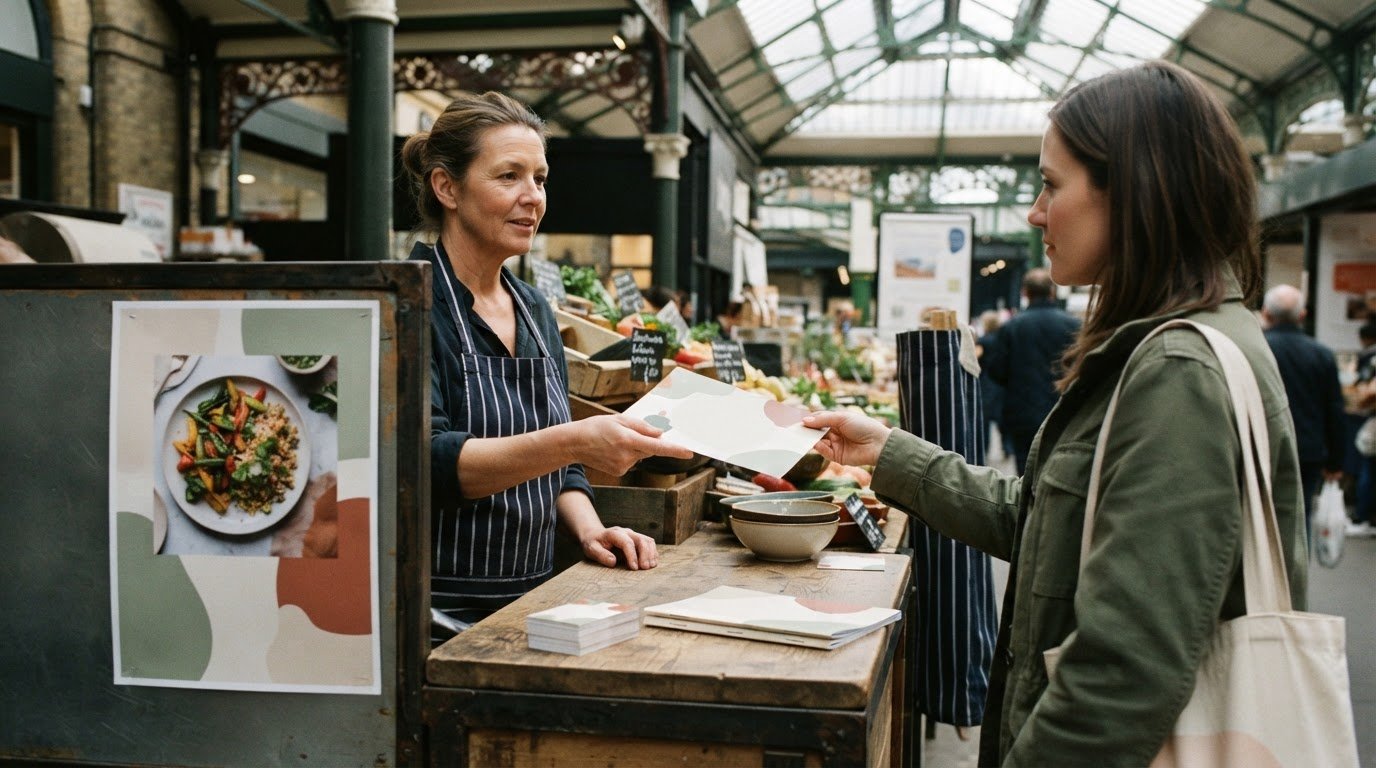
Flyers and business cards serve different stages of a customer interaction. A card keeps contact details close at hand; a flyer can explain an offer, event or service in more detail. For example, a café could pair a concise card with a flyer describing its catering menu. Consistent logo placement and colour help both pieces read as one campaign.
Brochures suit businesses that need space for services, product details or case studies. Organise content around the reader’s decision: introduce the offer, explain its benefit, then provide contact details. A product brochure might give each item a clear image, specification and short description. Booklets can arrange longer information into sections without squeezing everything onto one sheet.
Reports need a clear information hierarchy. Use a title page, section headings, page numbers and consistent tables. A bound report is easier to handle in a meeting or review session. Wire binding allows pages to lie flat. PUR binding uses polyurethane adhesive along the spine and is a soft-cover option for long-run production.
Business stationery brings repeated communications into the same visual system. Letterheads, business cards and forms can share a logo, type style and colour palette. Keep essential details in consistent positions so recipients can find them quickly. For example, placing contact information in the same area on a letterhead and card supports a coherent company identity.
Choose production based on quantity and document type. Digital printing can be a practical option for smaller print jobs or when content may change. For a small batch of event materials or an updated report, this can suit changing content without committing to a large run. Confirm the final artwork, paper choice and binding before production begins.
Paper, finish and layout affect how a card feels and represents your business. Compare options with the card’s purpose in mind: a premium finish may suit client introductions where presentation matters, while a regular card can work well for everyday networking and broad distribution. Keep key details easy to scan and the design readable at its finished size. Review a proof for colour, spacing and wording before print. This helps cards stay consistent with brochures, reports and other stationery, creating a polished and recognisable presence in customer conversations.
Event, signage and exhibition materials
Exhibition print needs to work from the visitor’s viewpoint. At Olympia London or ExCeL London, a stand competes with nearby displays and venue activity. Give each item one clear purpose: identify your business, explain a service or invite visitors to talk. A short headline and prominent logo help people recognise your stand quickly.
Pull-up banners suit stand entrances, registration points and presentation areas. Place your main message near eye level, then support it with a concise benefit and contact detail. Keep important text away from the bottom, where tables or display furniture may obscure it. Use high-resolution artwork, CMYK colour and bleed where the print specification requires them.
Foam board signs can label a product display, mark a meeting point or present a diagram. For example, a property business could use one board for a development map and another for key features. Make type large enough for the expected viewing distance. A simple layout also helps visitors find information without obstructing movement.
Urgent print starts with a fixed event deadline. Work backwards from stand access and installation, allowing time for artwork approval, production, finishing and transport. If overnight printing is part of the plan, submit final files early and specify the collection or delivery window. Late changes to a logo or phone number can affect artwork approval and production timing.
Prepare a separate production file for each item. Confirm the finished dimensions, image resolution, colour profile, crop marks and bleed. Check names, dates and contact details against the approved event information. For a conference with several sessions, verify each session title and room before sending the final files. These checks reduce the risk of displaying outdated details.
Direct-to-stand delivery requires accurate venue information. The delivery plan should identify the event name, hall, stand number, recipient and access instructions. For example, a stand at ExCeL London may have venue-specific handling arrangements. Keep the organiser’s instructions with the print schedule and allow time for materials to reach the stand before setup.
Coordinate signage with the rest of the stand. Match banner colours to the presentation materials, and use the same service wording across boards and handouts. Consistent design helps visitors connect each item with your business. Confirm the layout and delivery details before production, especially when several items need to arrive together for an exhibition opening.
Business printing and marketing essentials
London businesses use cards, flyers, brochures, posters and display materials to reach customers. Each format serves a different purpose: a card supports a face-to-face introduction, a flyer can explain a limited-time offer, a poster can draw attention to a shop entrance, and a brochure can outline services for a sales meeting. For local business print marketing in London, choose formats to suit your audience and campaign goal.
Start with your audience and the action you want them to take. A café promoting a new lunch menu needs a clear offer, location and visiting details. A property adviser may need a concise service summary and contact information. Put the key message first, then arrange supporting details in a readable order. This keeps print marketing for London businesses focused on a practical customer response.
Keep brand elements consistent across every item. Use the same logo, type styles and colour palette on business cards and brochures. For a seasonal campaign, update the headline and offer while retaining recognisable brand details. This makes individual pieces feel connected, even when customers encounter them in different places.
Artwork preparation affects print quality. Supply a high-resolution PDF with the correct dimensions, embedded fonts and CMYK colour profile. Add bleed beyond the trim edge to avoid unprinted borders if cutting shifts slightly. Include crop marks when the printer’s file requirements call for them. A pre-flight review can catch missing fonts, low-resolution images or layout errors before production.
Paper and finish should match how people will use each item. A frequently handled card needs a suitable stock; a flyer for local distribution may call for a lighter sheet. Recycled or FSC-certified paper can support an environmental preference. Ask for digital samples when you need to compare paper weight, texture and colour before approving a larger run.
Schedule production around the campaign’s real deadline. Allow time for artwork approval, printing, finishing and delivery before a shop opening or community event. For repeat campaigns, keep approved files and record changes to dates, contact details or offers. This makes revisions clearer and helps avoid reprinting outdated information.
For a coordinated campaign, group requirements by purpose: customer handouts, in-store information and sales materials. A retailer might pair staff business cards with an entrance poster and brochures containing detailed product information. Before distribution, check every item for matching contact details, current offers and a clear next step.
Leaflets and flyers
A flyer works best when one message leads the page. For a Shoreditch café promoting a seasonal menu, put the offer first, then add opening details and location. A folded leaflet can carry more information, such as a service breakdown or event programme. Choose a format to suit the content and the reader’s next step. For local business print marketing in London, start with a clear audience and purpose.
Set a clear reading order before production. Use a headline, supporting detail and one response route, such as a phone number or booking page. For a local fitness studio, place the class offer, session details and address together. Keep body text readable and leave enough space around logos and essential information.
Legal requirements can depend on the distribution method and location. Before arranging a London campaign, identify whether teams will hand out leaflets on streets or deliver them to properties, then check relevant council guidance and property permissions. Keep the campaign details and distribution plan together so the team follows consistent instructions.
Street handouts and door-to-door delivery involve different practical checks. For street distribution, identify the exact handout area and any site-specific instructions. For door-to-door delivery, define the streets or postcodes and brief distributors on where materials should go. Don’t assume guidance in one borough applies across every London location.
Paper and format affect how a leaflet feels and how much copy it can carry. A single-sheet flyer suits a short promotion, while a folded leaflet creates panels for separate services or steps. For example, a home-repair business could use one panel for each service, followed by contact details. Choose stock to suit the piece’s intended handling and distribution.
Prepare artwork with the final trim in mind. Supply a high-resolution PDF with CMYK colour, correct dimensions and bleed beyond the cut edge. Keep headlines and contact details clear of trim areas. A proof review can catch a misspelled street name, expired offer or misplaced phone number before the print run proceeds.
Plan quantities around the campaign’s distribution area and purpose. A launch near Camden Market may need a different handout plan from a neighbourhood offer in Islington. For a London business planning leaflet distribution, record the locations, delivery dates and quantity allocated to each area. After distribution, compare enquiries or redemptions against the campaign’s response route, such as a dedicated code or landing page.
Connect responses with the campaign’s purpose, then use the format and stock choice to guide the next print order. Compare the options against how much information the piece needs to carry and how it will be distributed. Keep the chosen format consistent with the campaign message and response route.
London City Print: business cards
London City Print provides business cards, Booklets and Brochures, Posters and wire binding for business promotion. Choose these print formats for a clear introduction, detailed service information, a display message or a bound document. Each item has a distinct purpose, so matching the format to your audience helps keep the campaign focused.
Business cards give customers and contacts your essential details in a portable format. Make your business name, logo, role and preferred contact route easy to find. For a networking event, ensure the card is readable at a glance. Prepare artwork with the finished dimensions, CMYK colour, embedded fonts and bleed, then check spelling and contact details before approval.
Booklets and Brochures give you space to explain a product range or service process. Organise content into clear sections, such as an introduction, key services and contact details. A consultancy brochure could outline its services and explain how clients get started. Consistent headings and imagery help readers follow the information.
Posters suit messages that need to be read from a distance, such as an event announcement or in-store promotion. Keep the headline prominent, reduce supporting copy and make the next step clear. Check that the poster dimensions suit its display location. A design for a window may need a different layout from one beside a reception desk.
wire binding holds pages together while allowing a document to lie flat. It can suit a booklet used during a presentation or a reference document that readers open repeatedly. Confirm the page order, finished size and cover arrangement before production. These details help match the printed content to how people will handle the finished document.
For a coordinated campaign, align the logo, colour palette and wording across cards, brochures and posters. Keep the message consistent while adapting the amount of detail to each format. Before sending files, check names, telephone numbers, dates, dimensions and bleed. Clear specifications help keep production organised and reduce avoidable artwork changes.
If you’re planning business cards or supporting print materials, contact London City Print to discuss your project.
Frequently Asked Questions
What are the best print marketing materials for small businesses in London?
The best materials depend on where customers encounter your business and what they need next. A salon could use vinyl window graphics to identify its premises, business cards for appointments and brochures describing treatments. A neighbourhood event organiser or community group like Communities Together might choose posters for local visibility and flyers for attendee information. Choose each format for one audience task, then keep your logo, contact details and message consistent across the set.