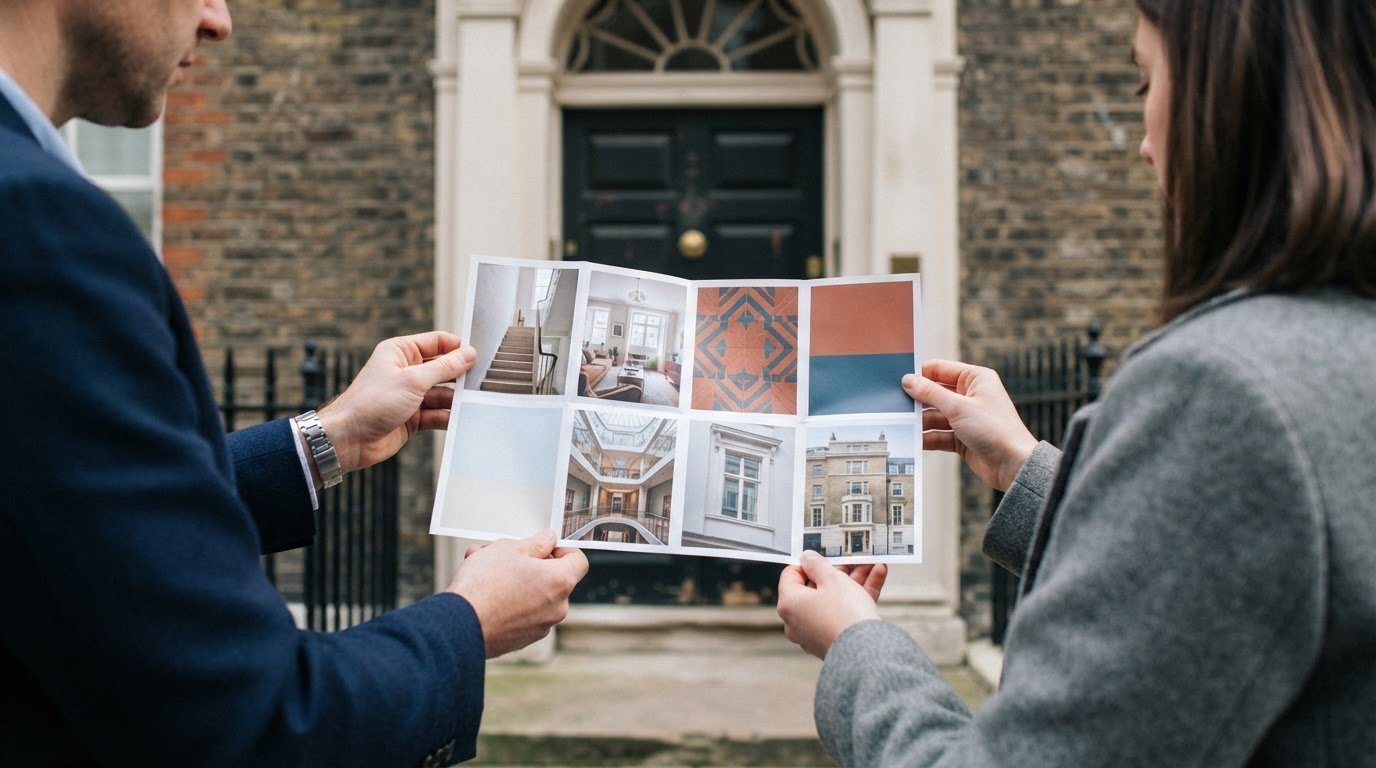
The heaviest paper isn’t automatically the best choice for a folded leaflet. A practical starting point for folded leaflet printing in London is a flat A4 sheet printed on 130gsm silk or gloss paper. You can then roll-fold it to DL size. This gives you a clear, compact format without making the stock choice more complicated than it needs to be.
Paper weight and coating affect how a leaflet feels and how its colours appear, while the fold determines how much information each panel can hold. Choosing all three together helps you find a format that suits the content, finished size and way readers will use it.
This guide compares silk, gloss and uncoated stocks, explains which folds suit different panel layouts, and shows how custom dimensions and finishing affect the result. It also covers when a folded leaflet balances space and portability, and when a flyer or brochure may suit your content better.
Key Takeaways
- Choose a fold that suits your content sequence: half-folds create four panels, while roll-folds and z-folds suit six-panel layouts.
- Protect important text and images with a safe area, and allow for the narrower inner panel in a roll-fold layout.
- Compare A3, A4 and A5 formats with custom dimensions to find a size that fits your content and distribution needs.
- Use a folded leaflet to keep more information in a manageable handout; consider a bound brochure when the content extends beyond six panels.
What paper stock is best for folded leaflet printing?
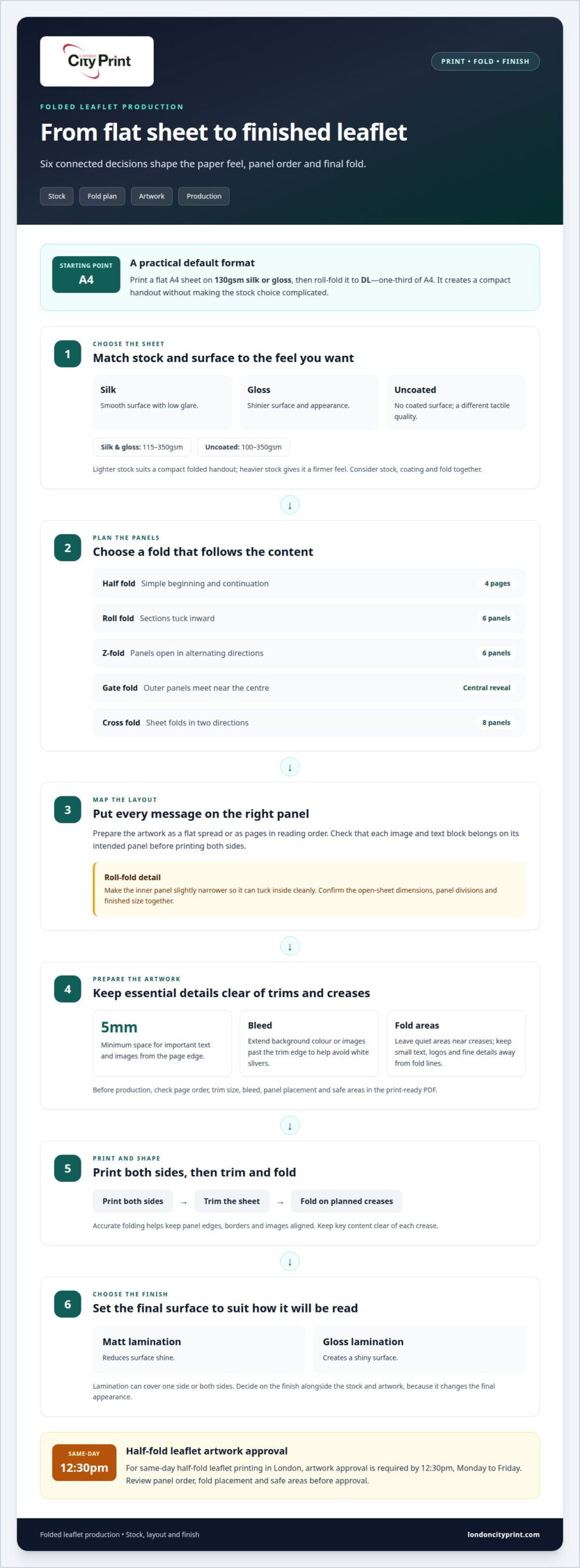
The right stock depends on how your leaflet should feel, read and fold. A common starting format is a flat A4 sheet, printed on 130gsm silk or gloss paper and roll-folded to one-third A4, also known as DL. Silk gives a smooth, low-glare surface; gloss creates a shinier appearance. Uncoated paper has no coated surface, which gives the page a different tactile quality.
Available stock ranges provide room to tailor the finished piece. Silk-coated and gloss-coated papers range from 115gsm to 350gsm, while uncoated stocks range from 100gsm to 350gsm. A printer can help match the paper to the job: a lighter stock suits a leaflet that needs to fold into a compact handout, while a heavier choice gives the piece a firmer feel. Coating, content and fold style all affect the final selection.
The fold determines how readers move through the panels. A half fold creates a four-page format, well suited to content with a simple beginning and continuation. A roll fold tucks sections inward, while a z-fold opens in alternating directions. A gate fold brings the outer panels together near the centre, creating a reveal when opened. A cross fold folds the sheet in two directions to create eight printed panels.
Before production, map the content to the layout. A four-page sequence points to a half fold, while six panels can suit a roll fold or z-fold. A gate fold works well when the content benefits from a central reveal. The layout review should also identify panels that need extra space and whether a roll-fold inner panel needs to be slightly narrower than the others.
Artwork needs room for trimming and accurate folding. Keep important text and images at least 5mm from the page edge, and leave clear quiet areas near each fold. Bleed extends background colour or images past the trim edge, helping avoid white slivers if cutting shifts slightly. Keep small text, logos and fine details away from fold lines, where creasing can interrupt them.
For same-day half-fold leaflet printing in London, artwork approval by 12.30pm, Monday to Friday, is required. A printer can assess the file’s panel order, fold placement and safe areas before approving it for production. That early check helps prevent misplaced content and supports a clean, finished format.
Printing, folding and finishing process
A folded leaflet goes through artwork preparation, printing, trimming, folding and finishing. Each stage affects the alignment of the artwork and how the finished piece feels in hand.
Paper Stocks and Finishes
Silk-coated and gloss-coated stocks range from 115gsm to 350gsm; uncoated options range from 100gsm to 350gsm. The lower or higher weight affects the sheet’s feel and how it handles folding. Matt or gloss lamination can cover one or both sides. Consider whether the leaflet needs a smooth surface, a reflective finish or a more natural paper feel.
Lamination adds a surface layer, so consider it when deciding how images and text should look and feel. Gloss creates a shiny surface; matt reduces the shine. Assess the stock, fold and finish together, because a coating changes the final appearance. For example, a leaflet led by full-colour images may suit a different surface from one led by text.
Finished Sizes and Dimensions
Printers offer folded leaflets in A3, A4 and A5 sizes, and can produce custom sizes. The flat sheet size and fold pattern determine the finished dimensions, so specify the size you want after folding. For example, a flat A4 sheet roll-folded to one-third A4 becomes DL format. The printer can use your intended distribution method to help choose a practical finished size.
Panel width matters as much as the overall format. A roll fold needs a slightly narrower inner panel so it tucks inside cleanly. Confirm the open-sheet dimensions, panel divisions and finished folded size together. These measurements help position the artwork accurately before printing and folding.
Prepare the artwork as a flat spread or as pages in the correct reading order. Check that every image and text block belongs on the intended panel, then print both sides of the sheet. A clear panel sequence helps prevent a cover image from appearing inside or the content from reading out of order.
After printing, trim the sheet and fold it along the planned creases. A roll fold brings panels inward; a z-fold alternates their direction. Accurate folding matters at the centre and along each panel edge, where misalignment can affect images, borders or small type. Keep key content clear of crease lines when reviewing the layout.
Choose a finish that suits how readers will handle the leaflet. Matt or gloss lamination can cover one or both sides. A one-sided finish leaves the reverse unlaminated; double-sided lamination covers both printed faces. Decide on the finish alongside the paper stock and artwork, rather than after the layout is complete.
Before production, provide a print-ready PDF with the correct page order, trim size and bleed. Bleed lets background colour extend beyond the trim edge; quiet areas keep essential text clear of edges and folds. A printer can assess these file details before printing, then trim, fold and finish the sheets to the agreed dimensions.
Leaflet sizes and custom dimensions
For folded leaflet printing in London, start by defining where you will store, hand out or display the finished piece. Its practical use helps shape the layout before you prepare the artwork.
Available Leaflet Sizes
Choose the finished size with both the reader’s hands and the display space in mind. A leaflet for an information rack needs to fit the rack; one you include in a welcome pack should sit comfortably alongside the other materials. The finished dimensions matter just as much as the flat sheet.
Then match the usable surface to the content hierarchy. Give the main message enough visual prominence, and reserve appropriate space for supporting copy, images and contact details. A crowded panel can make information harder to scan, while an oversized layout may leave content feeling disconnected. A printer can assess the planned layout against the physical format.
Consider how readers will open and handle the leaflet. If readers will use it for quick reference, make key details easy to find once they unfold it. If you need it to sit beside a product, match its proportions to the display. These decisions help ensure the format supports the intended reading experience.
Custom Dimensions and Quantities
Custom dimensions can meet a specific campaign need, such as fitting a presentation folder or matching a branded display. Share the finished measurements and intended use so you can plan the flat artwork around the final piece, rather than adapting it after you set the visual structure.
Consider how content will flow before approving unusual proportions. A long, narrow layout may suit a sequence of short messages, while a broader face can give a leading image more room. Folds also affect the order in which readers encounter each section. Review the flat design alongside a folded mock-up to reveal awkward transitions before printing.
Plan quantities around distribution as well as artwork. Estimate where recipients will get the leaflet, such as at a reception desk, in a mailed pack or during a campaign. Different delivery points may need separate bundles or versions. A clear brief helps match production and packing to your distribution plan.
For a custom job, include the finished measurements, intended use and any display or packing constraints in the brief. Add the artwork status and required versions if the message varies by audience. This gives production a clear basis for assessing the layout and preparing the right format. A precise specification keeps the finished piece aligned with its purpose from design approval through distribution.
Folded leaflets versus flyers and brochures
Choose between flyers, folded leaflets and brochures by matching the format to your message. A flyer presents information on a flat sheet, so readers see the main content straight away. A folded leaflet divides content into sections that readers open in sequence. A brochure suits longer material that needs a bound structure.
A flyer works well for a direct announcement, such as a new service or event. One side can carry a headline, image and response details; the reverse can provide supporting information. Full colour can draw attention, while a simple layout keeps the message clear. Choose this format when readers need the essentials at a glance.
Folded leaflets fit more information into a manageable handout. Depending on the fold, they can double or triple the available content space. A six-panel layout can separate an introduction, features, practical details and contact information. Readers open each section in sequence, making the format useful for a product overview or event programme.
Distribution can help determine which format to choose. You can hand out a flat flyer at an event or place it near a checkout for quick collection. A folded leaflet gives readers more information to take away, such as directions, service details or a promotional offer. If a screen suits the information better than a printed handout, a digital version may work better.
A bound brochure offers a stronger choice when the content goes beyond six panels. It can organise longer product descriptions, multiple services or detailed images across pages. A six-panel leaflet can provide an overview; a brochure gives extended content a clearer structure. Consider how much information readers need before choosing.
Consider how the format guides readers to their next step. A flyer can focus attention on one action, while a folded leaflet can build context across several sections. For example, a venue handout might introduce the location, outline its facilities and finish with visitor information. A brochure can extend that sequence into more detailed sections.
Map the message to the available space before production. If one headline and a brief offer are enough, a flyer may do the job. If readers need several sections, a folded format can organise the information. For sustained detail, choose a brochure structure. This keeps each image, colour choice and paragraph relevant to the reader.
Do London leaflet printers offer design services and printed proofs?
Yes, London printers may offer design support and printed proofs, but these are separate parts of production. Design support shapes the layout and content; pre-flight file checks assess the artwork you prepare for print. A printed proof lets you review a physical sample before the full order proceeds.
For a folded leaflet, design starts with the finished size and fold. The layout must assign content to the correct panels and keep headings, images and contact details in reading order. London City Print’s in-house graphic design team can help prepare the panel plan and develop the visual hierarchy, select type and place images. Agreeing on the fold early helps avoid redesigning artwork later.
If you supply finished artwork, use a high-resolution PDF with the outer and inner faces arranged correctly. For a half fold, a two-page PDF can show one face on each page. A flat, unfolded spread also makes panel placement clear. Include the trim dimensions and bleed in the file setup.
Pre-flight file checks focus on print readiness rather than creative direction. They can assess page size, image resolution, embedded fonts, colour profile and bleed. For example, adjust a CMYK file if it has the wrong finished size before production. Keeping important text at least 5mm from page edges helps preserve a clear margin after trimming.
A printed proof serves a different purpose from a screen preview. It lets you assess the paper, colour, image detail and folding in print, rather than relying only on how a display renders the file. A physical sample can show whether small text remains readable or panel content sits too close to a crease. Review the proof and approve it before the full print run.
Proofing can also inform finishing decisions. A physical sample lets you assess colour, paper weight and finish. For example, reviewing a sample on silk stock helps you judge how its surface works with the printed images. A proof does not replace accurate artwork setup, but it gives you a tangible reference for the planned result.
Before production, decide whether you need creative layout help, technical file preparation, a physical proof, or a combination. Send the printer your text, images, preferred fold and finished size. If your artwork is ready, prepare your leaflet print file for a focused pre-flight review.
London City Print
London City Print helps you turn print requirements into practical choices about format, artwork and finishing. When your content needs more room than a single sheet allows, its Booklets and Brochures provide a bound option; Posters and Roller Banners support larger visual displays, while wire binding suits documents that need to open flat.
For a leaflet project, bring your intended finished size, fold, paper preference and print-ready artwork into the conversation. Clear production details help align the layout and finish with how readers will handle the piece. If your information extends beyond a folded format, Booklets and Brochures may provide a more suitable structure.
Contact London City Print to discuss your print requirements and the format that fits your project.
Plan your next print step
Set the next step around how your audience will receive and use the finished piece. For folded leaflet printing in London, define the purpose, distribution method and required delivery date before production begins. This gives the print brief direction and keeps decisions aligned as the project progresses.
If your campaign needs related materials, London City Print offers Booklets and Brochures, Posters and Wire Binding. These formats can support a wider communication plan when one leaflet cannot carry every detail or information needs a bound presentation. Give each item a clear role so the materials work together without repeating the same message.
Bring your project requirements together, including the intended format and artwork status. A focused brief helps move the job towards production with fewer unanswered decisions. Contact London City Print to discuss your print project and take the next step with confidence.
Frequently Asked Questions
Are same-day leaflets delivered already folded?
We can fold half-fold leaflets in-house and supply them finished and boxed, rather than as flat sheets. This lets event teams place materials directly on counters or pack them into welcome folders. Include the fold and finished dimensions in your production brief. These details determine how each stack is presented and stored before distribution, and help the finished pieces suit your handout plan.
Folded leaflet, flyer or brochure?
Choose a flyer for a short message readers should see straight away, such as an event announcement. A folded leaflet suits information that benefits from separate sections, like a service overview with contact details. A brochure works better for extended content that needs a bound sequence. Consider what readers need to do next: pick up a quick notice, open a compact handout or keep a longer reference document.
What artwork should you supply for half-fold leaflet printing?
Supply a two-page PDF with the outer and inner faces on separate pages. Keep the panels in their intended positions so the cover and inside content appear correctly after folding. Include the finished page size and bleed in the artwork setup. Before approval, review the outside and inside as separate spreads, checking that headings, contact details and directional content read in the right order.
What is a tri-fold leaflet?
A tri-fold leaflet divides a sheet into three sections and folds into a compact handout. Depending on the folding pattern, it may use a roll fold or a z-fold, creating six printed panels across both sides. A restaurant could use the panels for an introduction, menu highlights and booking information. Keep the reading order clear, especially where one panel tucks behind another.
What folded leaflet sizes and fold types do London printers offer?
Common formats include A3, A4 and A5, with half-fold, roll-fold, tri-fold and z-fold layouts. Cross folds create eight printed panels, while gate folds bring outer panels towards the centre. Half-fold orders can also use A4-Strip, 396×210, A3-Strip and custom dimensions. Match the open sheet, folded size and panel arrangement to how recipients will handle the leaflet.
Which London printers offer same-day or next-day folded leaflet printing?
London City Print lists folded leaflets, but this does not confirm that it offers same-day printing for them 24 hours a day or specify a next-day schedule. For a deadline-led job, have the artwork, fold, finished size and quantity ready together. This lets production assess the full specification before you set collection or delivery plans.
What paper stocks and finishes are available for folded leaflets?
Silk-coated and gloss-coated papers range from 115gsm to 350gsm; uncoated stocks range from 100gsm to 350gsm. A common starting point is 130gsm silk or gloss. Choose based on how the leaflet should feel and appear, and consider whether a coated surface suits image-heavy content or a text-led handout.
What artwork and file specifications do London leaflet printers require?
Prepare a print-ready PDF at the intended finished size, with pages or panels in the correct reading order. Include bleed for artwork that reaches the trim edge, and keep essential text clear of folds and edges. A 5mm safe area is a useful guide for keeping key details away from the page edge. For a roll fold, allow the inner panel to be slightly narrower.