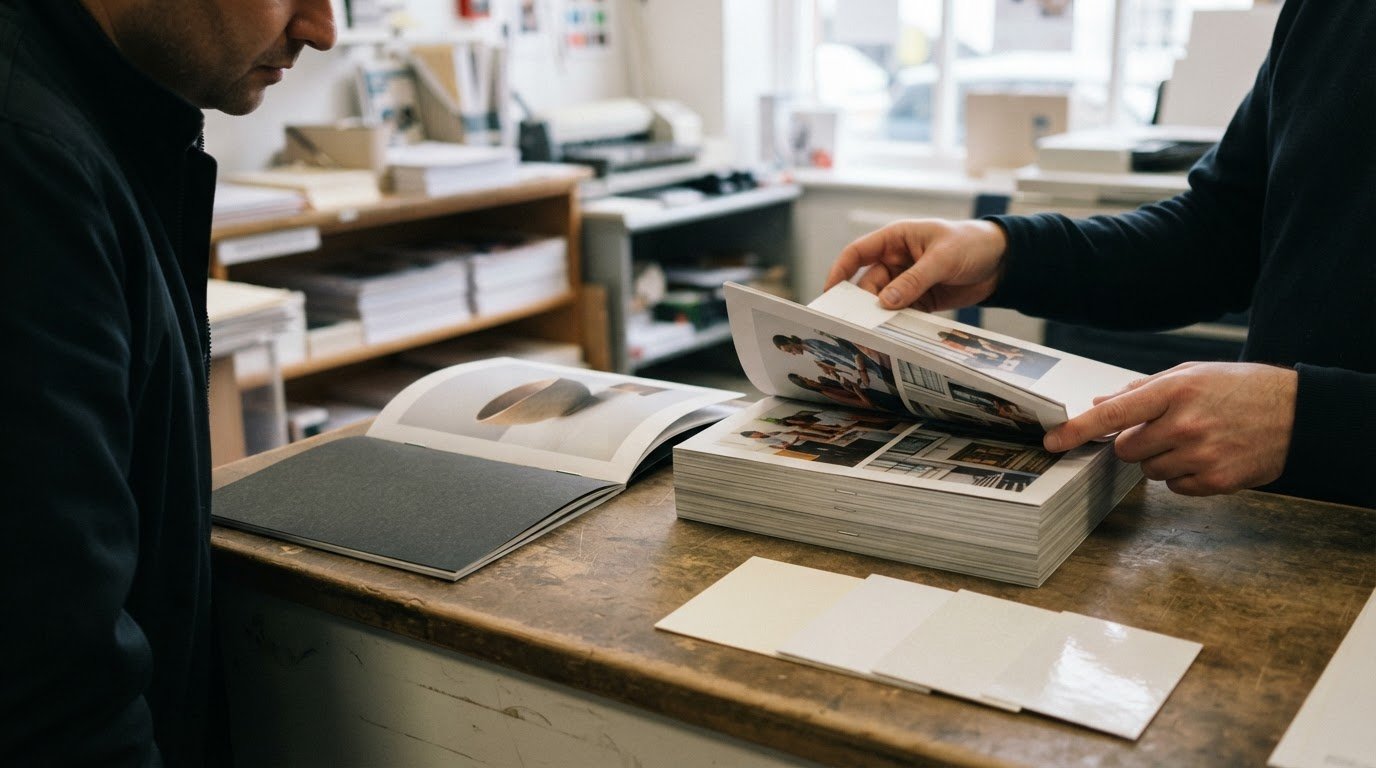
The quote for printing a booklet depends on its page count, print quantity, paper, colour and finishing. These choices also affect production time, so a clear specification helps you plan the job and compare options.
You may know what the booklet is for but still be deciding on details that shape the finished result. Paper weight affects the feel of each page, while a heavier cover can give the booklet more structure. Colour, binding and print quantity also influence production.
This guide explains how your choices affect a quote and what to consider when selecting print options. It also covers artwork preparation, including CMYK colour and bleed, to help prevent production delays. With the key details decided, you can submit a print-ready brief and choose specifications that suit your project and deadline.
Key Takeaways
- Set your page count, quantity, paper and binding choices before requesting a quote to make your brief more precise.
- Choose paper weight and cover stock based on how you want the booklet to feel and how it will be used.
- Match colour and finishing choices to the design, audience and purpose of the booklet.
- Prepare print-ready artwork with the correct CMYK colour setup and bleed to help reduce avoidable production issues.
- Allow time for artwork preparation, print method and finishing when planning your delivery deadline.
Printing a Booklet: Factors That Shape Your Quote
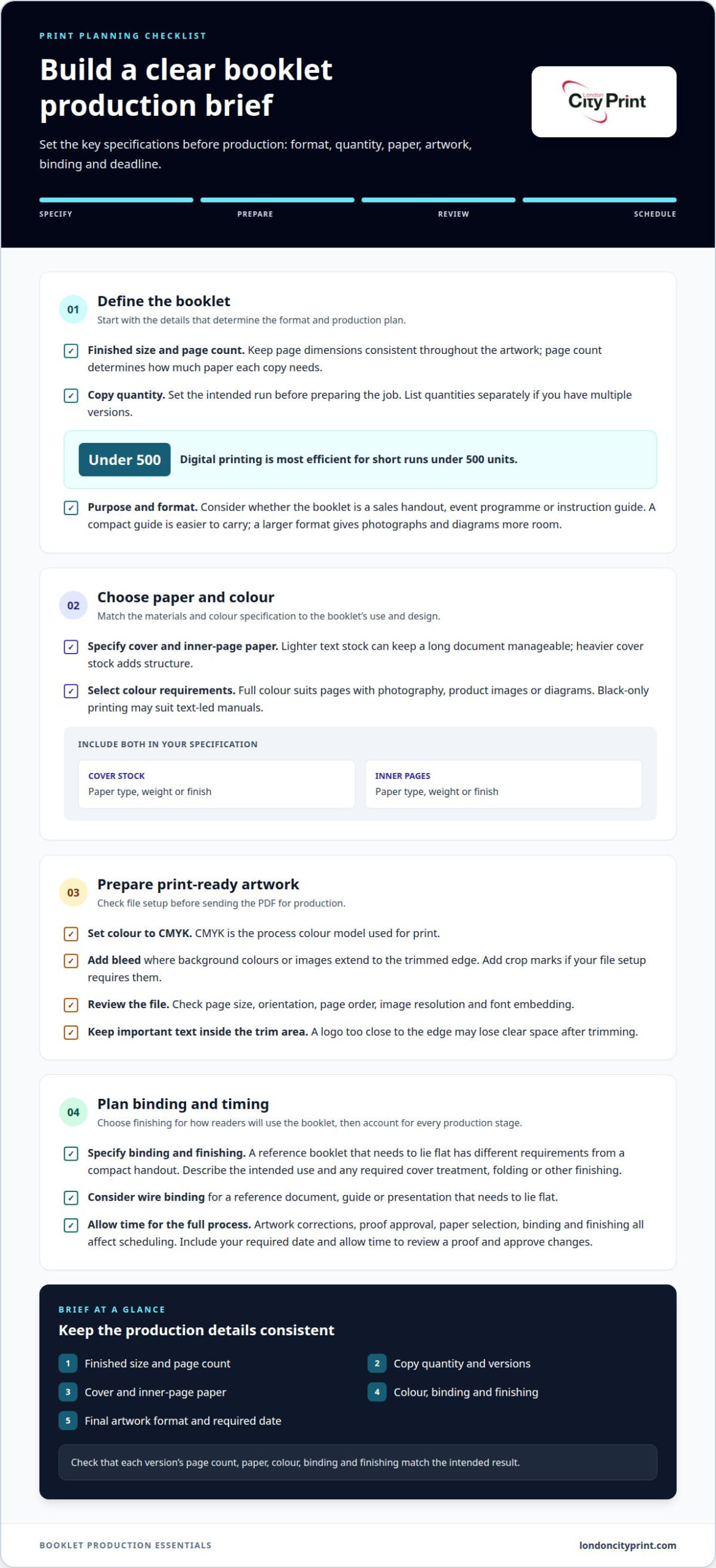
A booklet’s production requirements depend on its quantity, page count, size, paper, colour, binding and finishing. Each choice affects materials, setup or handling. Before printing a booklet, define these details and consider how readers will use it. A sales handout, event programme and instruction guide may each need different specifications.
Start with the page count and finished size. Page count determines how much paper each copy needs and how the pages fit together. Finished size affects sheet layout and trimming. A compact product guide, for example, is easier to carry, while a larger format gives photographs and diagrams more room. Keep page dimensions consistent throughout the artwork.
Quantity also affects the production plan because printing involves setup and handling as well as the print run. Digital printing is most efficient for short runs under 500 units. Set the intended copy quantity before preparing the job. If you’re planning multiple versions, list each quantity separately. A different cover, language or content set may need its own production plan.
Paper shapes a booklet’s appearance, feel and function. Lighter text stock can keep a long document manageable, while heavier cover stock adds structure. Consider whether readers will handle it briefly at an event or refer to it repeatedly. Specify the paper for the cover and inner pages, particularly if you want different weights or finishes.
Colour, artwork and finishing
Colour affects the production specification. Full-colour pages work well for brochures with photography, product images or diagrams. Black-only printing may suit text-led manuals. Prepare artwork in CMYK, the process colour model used for print, and include bleed where background colours or images extend to the trimmed edge. Add crop marks if your file setup requires them.
Artwork issues can interrupt production or require corrections. Before sending a PDF, check the page size, orientation, page order, image resolution and font embedding. Keep important text safely inside the trim area. For example, a logo placed too close to the edge may lose some clear space after trimming. A carefully prepared file helps the production team assess the layout.
Choose binding and finishing to suit how the booklet opens and how readers will use it. A reference booklet that needs to lie flat has different requirements from a compact handout. Finishing can add production steps and handling. Describe the intended use, then specify any required cover treatment, folding or other finishing. Choose each process for a practical reason, not appearance alone.
Turnaround depends on the full production process, not just printing time. Artwork corrections, proof approval, paper selection, binding and finishing all affect scheduling. Allow time to review a proof and approve any changes. If a conference or launch sets the deadline, include it in your schedule and prepare final artwork promptly.
Before preparing the final production brief, gather these details:
- Finished size, page count and copy quantity.
- Paper choice for the cover and inner pages.
- Colour requirements, such as full colour or black only.
- Binding and finishing needs based on how readers will use the booklet.
- Final artwork format and the date you need the copies.
When printing a booklet, keep the production specification consistent across every version. Check that the page count, paper, colour, binding and finishing match your intended result. This helps you identify which choices suit the project’s purpose and deadline. A complete brief also makes it easier to resolve layout and production decisions before the job begins.
London City Print: Booklets and Brochures
London City Print produces booklets and brochures for businesses that need to present information clearly. Wire binding is suitable for reference documents, guides or presentations that need to lie flat. Choose a format that matches how readers will use the finished booklet, then prepare your artwork and production details for a quote.
For related event and display materials, London City Print also offers posters and Pull-Up Banners. Coordinating printed materials can help audiences recognise a campaign across a booklet and a display.
Contact London City Print to discuss your booklet or brochure project.
Take the Next Step With Your Booklet
Give your booklet a clear role in your next campaign, event or customer communication. Decide what you want readers to understand or do after reading it. That purpose can guide the order of information, the prominence of key messages and how the finished piece connects with other materials. A focused brief helps turn the design into a practical tool, rather than simply another document.
For printing a booklet, London City Print offers Booklets and Brochures, with Wire Binding for projects that need pages to lie flat. Posters can carry the same message in a larger display format. Choose the combination that fits how your audience will encounter the information, then prepare your content and artwork for production.
When you’re ready to move your project forward, contact London City Print to discuss your requirements. A clear brief is a strong start, and your next printed piece can bring your message to readers with purpose.